I work on making neural networks cheaper to run on real hardware, from CNNs on FPGAs to LLMs across GPUs, and build market-data pipelines and ML portfolio research for Brazilian and US stocks.
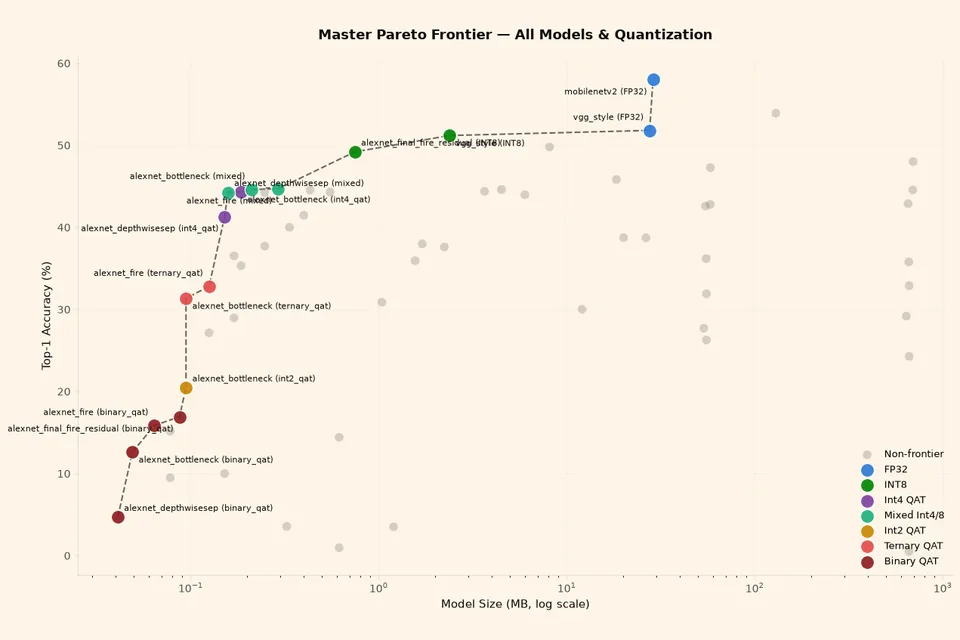
Hardware-aware neural networks: how restricting CNN kernels to the 2×2 and 3×3 sizes that Winograd hardware handles well affects accuracy, efficiency and INT8 quantization. Advised by Prof. Mateus Grellert, of UFRGS’s Microelectronics Group.
Contribution & learnings
How I contributeI run the kernel-size study end to end on PCAD, UFRGS’s HPC cluster, through Slurm: 152 runs in the main study, plus robustness and hybrid rounds on Tiny ImageNet and PASCAL VOC, each trained in FP32, then quantization-aware, then converted to INT8.
What I’m learningMeasure the seed noise before trusting a difference: between two single runs, the seed alone moves the gap by 0.7 to 1 point, so anything inside that band is a tie, and the best of 24 configurations had to be rerun with two more seeds before I trusted it. Beyond the technical side: keeping a 152-run study organized and reproducible, and reporting results to my advisor with their limits and not just the good news.
Python
Deep Learning
Quantization
HPC
Research collaboration · UFRGS · since 2026
4-bit Winograd on FPGA: four products per DSP, 1.98× the 8-bit throughput
3,379 GOPS on VGG16 with 1,024 DSPs (ZCU104) · the 4-bit network I trained: 68.51% ImageNet top-1, 3.08 points below float
Verilog accelerators for 3×3 convolution with the Winograd algorithm (F(2,3), F(4,3), F(6,3); INT8 and 4-bit), designed by my labmate Thomas Schmitz; I bring the network and accuracy side. Co-author of an invited IEEE OJCAS article extending Thomas’s SBCCI 2026 paper (in preparation) and of an ISCAS paper under review.
Contribution & learnings
How I contributeI evaluate Thomas’s accelerator lines on 16 networks adapted to 3×3 kernels on an AMD Alveo U200: cycle counts from netlist simulation, Fmax and power from Vivado, and accuracy under the accelerator’s own arithmetic. For the OJCAS article I trained the 4-bit network directly in the Winograd domain (per-filter scales, three seeds), took it into the RTL with bias, and revised the paper’s numbers and text.
What I’m learningAn arithmetic gain is a ceiling, not throughput: bigger tiles need wider data and harder timing closure, and hardware numbers only count once they match a software reference bit for bit. Working on someone else’s design taught me to improve it without touching it: measure through his test gate, report what breaks, and let the designer decide.
FPGA
Vivado
Winograd
Quantization
Solo project · since 2025
Point-in-time market data for B3 and ~9,600 US stocks, free of lookahead and survivorship bias
B3 since 2000, delisted companies included · US: 34M price rows, SEC EDGAR fundamentals back to the 1990s, FRED macro · LightGBM portfolio research on top, in progress
Machine-learning research for portfolio management on the Brazilian equity market (B3): a point-in-time data pipeline and a LightGBM-based portfolio-construction study under walk-forward backtesting, now expanding to US equities.
Contribution & learnings
How I contributeI built the whole pipeline: prices, CVM fundamentals with their real filing dates, delisted companies to avoid survivorship bias, and macro data; then a LightGBM alpha model, a risk model and a cost-aware optimizer. For the US expansion I’ve collected prices for ~9,600 tickers (34M rows), SEC EDGAR fundamentals back to the 1990s and FRED macro data.
What I’m learningA configuration picked from many backtests means little until it is corrected for multiple testing (a deflated-Sharpe check showed me that), and survivorship bias and filing dates matter as much as the model. Running a long project alone taught me self-management: set my own milestones, change one variable per experiment, and act as my own reviewer, so no layer goes in until the one below beats its baseline.
Python
LightGBM
Walk-Forward Validation
Portfolio Optimization
Background
I'm an undergraduate Computer Engineering student at UFRGS, one of Brazil’s most prestigious universities, rated the country’s best federal university by the Ministry of Education in 2022. Before that, I studied Electrical Engineering at UFSC. I work at the intersection of hardware and machine learning: my current research makes neural networks a better fit for hardware accelerators. I owe much of this work to my advisor, Prof. Mateus Grellert, whose mentorship shaped how I do research.
Outside the lab, I build point-in-time market data and ML portfolio research for B3 and US stocks.
At UFSC I built a laser 3D scanner for an underwater-inspection ROV project and worked on the Shell Eco-marathon team. Since then I’ve led a team of three in the IBM SkillsBuild challenge, built a fire-season forecast at NASA Space Apps and, outside engineering, took part in UFRGSMUN, negotiating proposals and reconciling opposing views.
UniversityUFRGS — Computer Engineering
PreviouslyUFSC — Electrical Engineering
LanguagesPortuguese · English · French · Spanish
Experience
LABMETRO · UFSC · 2025 · Vision + embedded
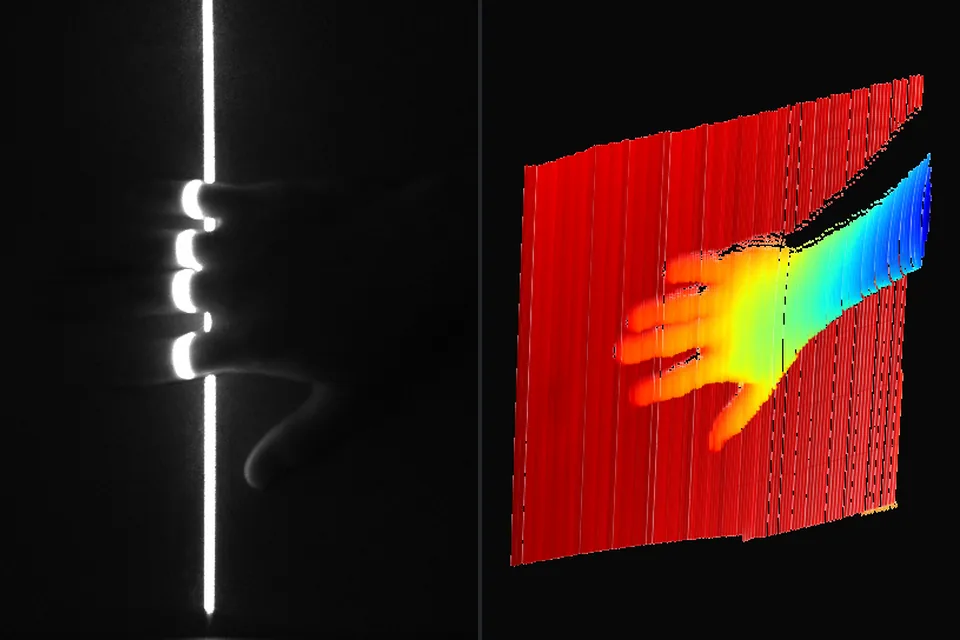
Low-cost laser 3D scanner for underwater inspection, from hardware to point cloud
Camera, laser and encoder-driven rotating mirror (Arduino) · subpixel laser-line extraction · gradient-boosted depth model · FINEP-funded ROV at UFSC
VORIS (Remotely Operated Vehicle for Underwater Inspection) is a FINEP-funded project at UFSC’s Metrology and Automation Laboratory (LABMETRO), with Petrobras as an interested party: an ROV with 3D optical measurement systems for submerged structures. In my undergraduate research, working with Prof. Diego Fabre, I built and evaluated its laser-triangulation testbed: a camera, a laser and a rotating mirror that sweep a scene and turn it into a 3D point cloud.
Contribution & learnings
How I contributedI built the system end to end: the hardware (an Arduino Uno R4 driving a stepper-motor mirror read by an absolute encoder, PWM laser control and image capture synchronized to the scan angle), subpixel laser-line extraction with an intensity-weighted centroid (far less noise than thresholding), the geometric triangulation model (camera normalization, camera–laser geometry and mirror-angle correction), a gradient-boosted regression model trained on labeled scans to correct systematic depth errors, and a graphical interface to run it all.
What I learnedA model is only as good as its calibration: geometry was accurate near the center of the view, but small errors in calibration and laser angle grew toward the edges. Learning those errors from data reduced the artifacts there, but only as far as the training data reached, which points to a hybrid with geometry as the backbone. Working at LABMETRO also put me, an electrical-engineering student, in a mechanical-engineering lab alongside metrologists and computer-vision researchers, working with professors from different specialties: I learned to explain my subsystem in each of their terms, to turn their critiques into improvements to the testbed, and to deliver on a funded project’s schedule.
Computer Vision
Embedded Systems
3D Reconstruction
Machine Learning
Student competition team · 2025 · Engineering + marketing
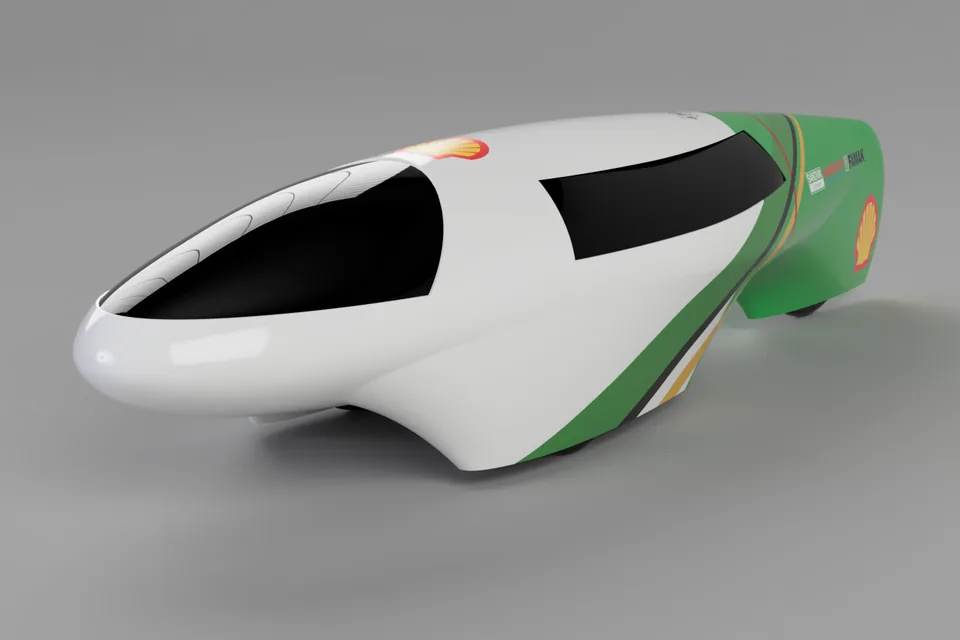
Carbon-fiber composites on an ultra-efficient prototype, and the team’s marketing
Shell Eco-marathon team · gasoline and electric prototypes · technical visit to Nanopoxy (epoxy resins)
E3 (UFSC Energy Efficiency Team) designs, builds and validates ultra-efficient gasoline and electric prototype vehicles for the Shell Eco-marathon. I joined in 2025 and worked on the car’s engineering and the team’s marketing.
Contribution & learnings
How I contributedI worked mainly on the car’s engineering, including hands-on work with carbon-fiber composites; took part in a technical visit to Nanopoxy, a manufacturer of epoxy resins for composites — the same family of materials used in the car; and did the team’s marketing while also organizing the marketing area.
What I learnedHow carbon fiber and epoxy resin combine into light, stiff parts, and, at Nanopoxy, what goes into the resins themselves. Organizing the marketing area meant splitting tasks among teammates, setting deadlines and following up; doing it alongside the engineering work forced me to prioritize, and to explain the car’s technical side in terms people outside engineering could follow.
Engineering
Carbon Fiber Composites
Marketing
Teamwork
Projects
Hackathon · 2026 · NASA Space Apps
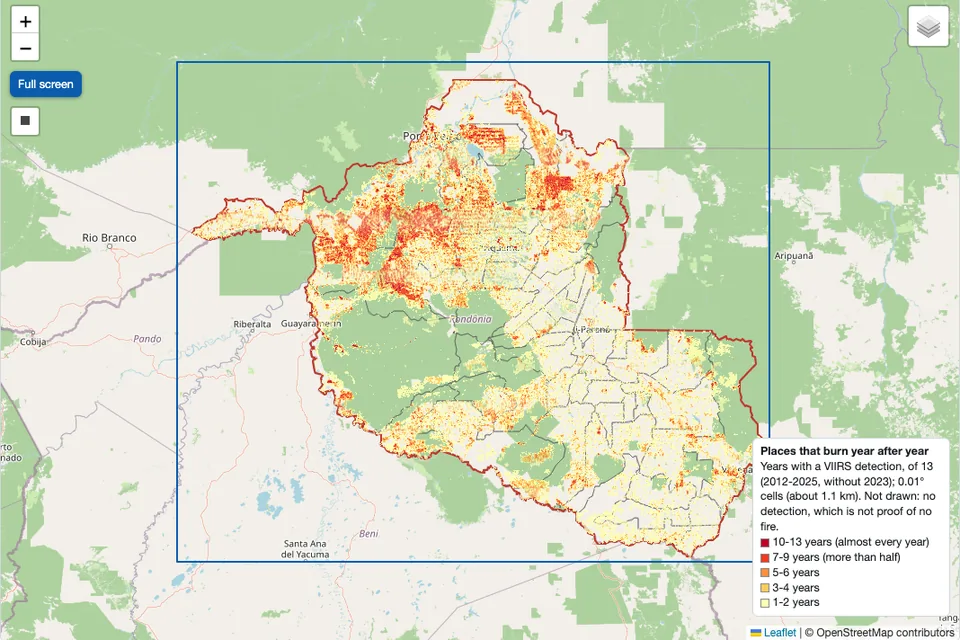
Forecasts where Brazil will burn next season, cell by cell
NASA FIRMS, MODIS + VIIRS merged (2000–2026) · a simple ratio model beat the ML challenger · participation certificate
A web app that merges NASA FIRMS fire detections from both satellite sensors into one consistent series and turns it into a monthly burning calendar, piloted in Rondônia and extended to every Brazilian state.
Contribution & learnings
How I contributedOne of the two main developers (67 commits). I built the fire-season and “compared with the usual” views, the next-season outlook with per-cell fire chances, the national pilot with IBGE boundaries and field tools (shareable links, “where to act first”, custom-area upload). I also tested an ML challenger, which did not beat the simpler ratio method, and wrote the pipeline tests.
What I learnedSatellite data has to be reconciled across sensors before any analysis means anything, and a simple, explainable baseline can beat ML; reporting that honestly is part of the result. The hackathon taught me to code under pressure: cut scope early, ship the core first, split the work clearly with the other main developer, review each other’s code fast, and keep tests so speed doesn’t break what already works.
Python
JavaScript
NASA FIRMS
Geospatial
Online prototype · led a team of 3
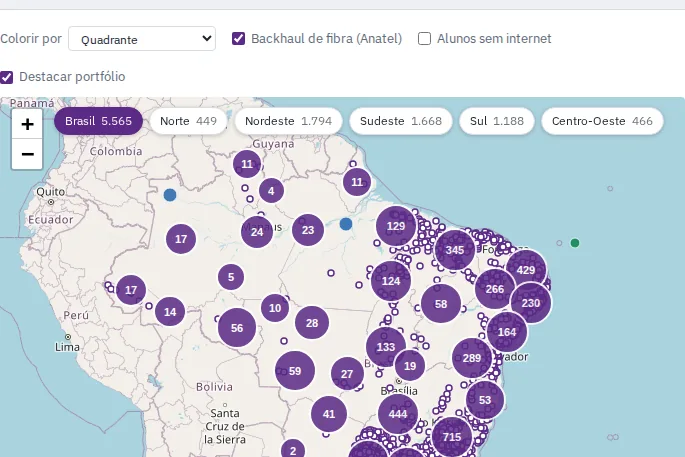
Budget-optimal connectivity plan for Brazil’s 5,570 municipalities
NPV, payback and portfolio optimization · IBM Granite explanations checked against the numbers · 230 automated tests
Decision-support system for the IBM SkillsBuild & Fundação Telefônica Vivo challenge: ranks municipalities for connectivity expansion with public data (Anatel, IBGE, INEP), financial analysis, portfolio optimization and an IBM Granite agent that explains each recommendation.
Contribution & learnings
How I contributedI led the team of three that built it and owned the decision engine: the municipality priority scores, backhaul distances, the financial tool (payback, NPV, sensitivity), portfolio optimization with PuLP/CBC (IBM CPLEX optional) and a 2021→2025 backtest. I also led integration: the FastAPI backend, checks that Granite’s text matches the engine’s numbers, CI and the deploy.
What I learnedHow to turn a business question into an optimization model with real budget constraints, and why LLM output must be checked against the data. Leading it, I learned to split the work by who knew what best, to fix interfaces and mock data early so data, engine and UI could move in parallel, and to make the final calls when the pieces had to fit together before the deadline.
Python
FastAPI
Optimization
IBM watsonx
Completed benchmark · team of 3
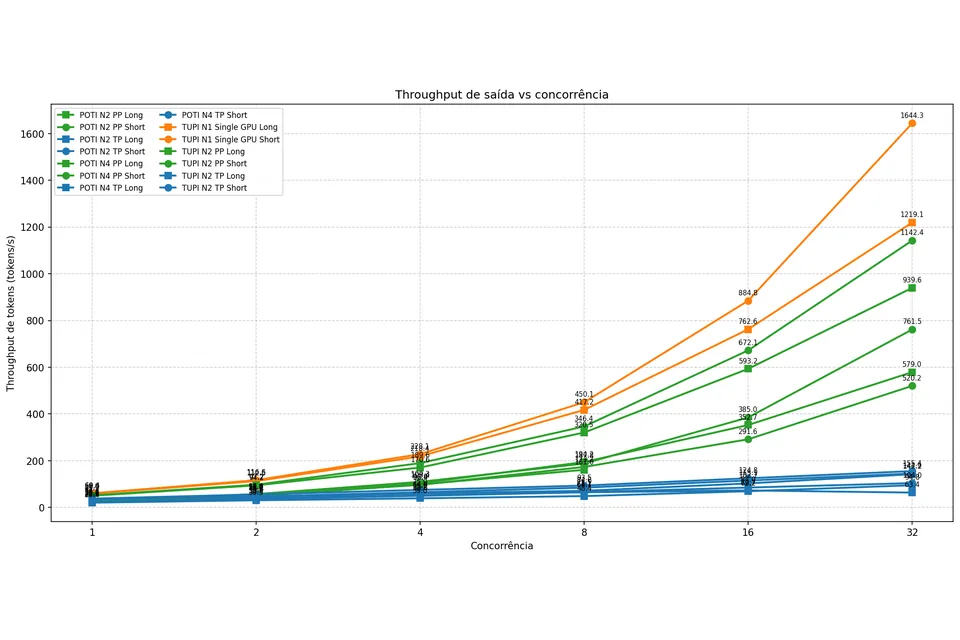
Across nodes, tensor parallelism spent up to 97% of GPU time on communication
Qwen2.5-7B on 1–4 GPUs · vLLM + Ray on PCAD, UFRGS’s HPC cluster · takeaway: if the model fits on one GPU, don’t split it
Course project for UFRGS's Performance Evaluation class: benchmarks Tensor and Pipeline Parallelism for LLM inference (vLLM and Ray) on PCAD, UFRGS's HPC cluster.
Contribution & learnings
How I contributedI handled the GPU and network side of the analysis: GPU telemetry (utilization, power draw), network measurements, the statistical-analysis notebooks and graphs, the run scripts and the final slides.
What I learnedHow to design a performance experiment with factors and repetitions, and how tensor and pipeline parallelism move the bottleneck between compute and communication. Owning one part of a team study taught me to agree on the plan up front, deliver data the others could use directly, and plan runs around a shared HPC cluster’s queue.
Python
vLLM
HPC
Completed prototype · solo
Sorts a messy folder by meaning, not by filename
Sentence embeddings + KMeans · YAKE names each folder · dry-run preview before any move
AI-powered document organizer using sentence embeddings, keyword extraction, and KMeans clustering to group files by semantic similarity.
Contribution & learnings
How I contributedI built it solo: text extraction from PDF, DOCX, TXT and XML plus offline audio transcription with Vosk, sentence embeddings with KMeans, YAKE keywords to name each folder, and a dry-run preview before any file moves.
What I learnedApplying NLP to messy real-world files, and that unsupervised clusters are only useful with readable labels. Building it alone taught me to scope down to a working prototype first and to design for the user’s trust: a tool that moves files must always show a preview.
Python
NLP
Clustering
Open-source contribution
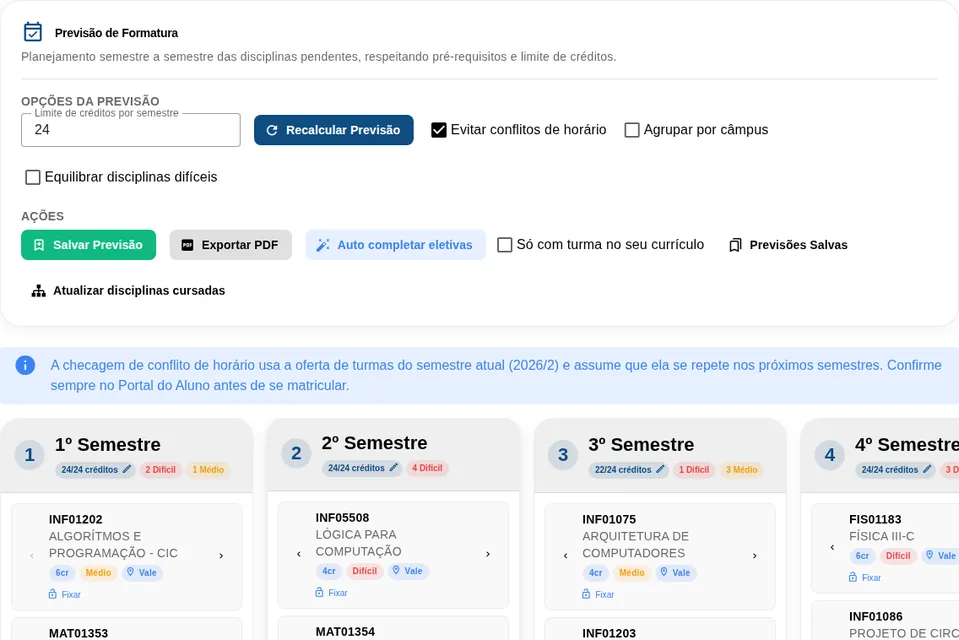
AI course assistant and graduation forecast for UFRGS students
Pull request, not merged (upstream no longer maintained) · Vue · rate-limited AI endpoint · Vitest tests
Pull request to an open-source UFRGS enrollment-assistance app, adding features I missed while using it as a student.
Contribution & learnings
How I contributedI added an AI assistant for course and schedule questions (scoped to the selected program, with production CORS/CSP and rate limits), a graduation forecast with PDF export, .ics schedule export with side-by-side comparison, and set up Vitest with tests for the core services.
What I learnedHow to contribute to someone else’s codebase: follow its conventions, keep a pull request focused and explain why each change matters so the maintainer can review it quickly; and how to add tests around code I did not write.
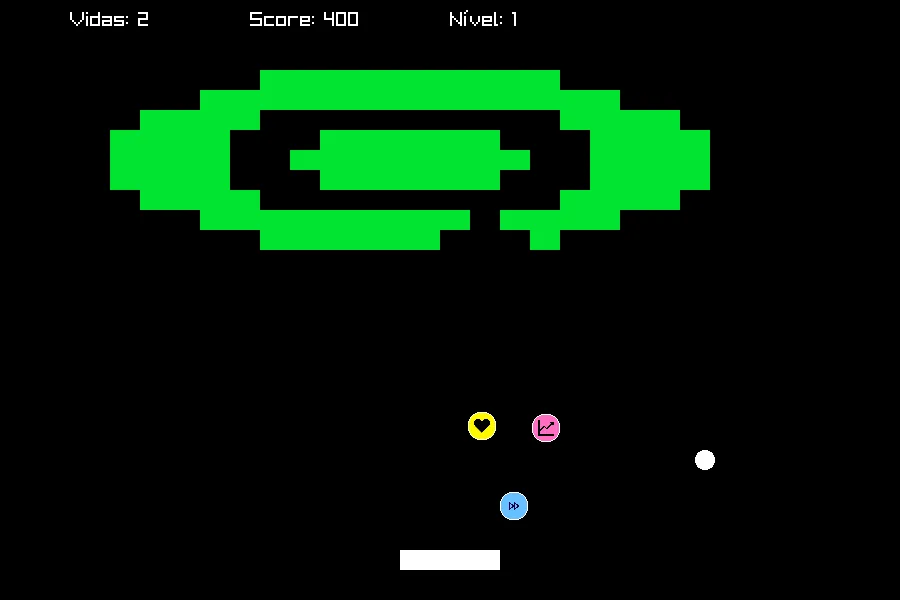
An arcade-style Brick Breaker built in C with Raylib: keyboard-controlled movement, collision detection, lives, scoring, power-ups and multiple levels loaded from files.
Contribution & learnings
How I contributedI wrote most of the code (32 of 38 commits): modular game states, collisions, power-ups, levels loaded from files, binary save files with score ranking, audio and the HUD.
What I learnedStructuring a C program into modules and handling memory and file I/O by hand. Working in a pair taught me to split the game into modules each of us could own, agree on the interfaces between them and use Git to keep our work in sync.
C
Raylib
Game Systems
Activities
Model UN · 2026 · in English
Negotiated counter-terrorism and cybersecurity policy; chosen by the press for a special interview
UN Office of Counter-Terrorism · terrorism in the Sahel and cyberterrorism · one of four delegates interviewed before the whole conference
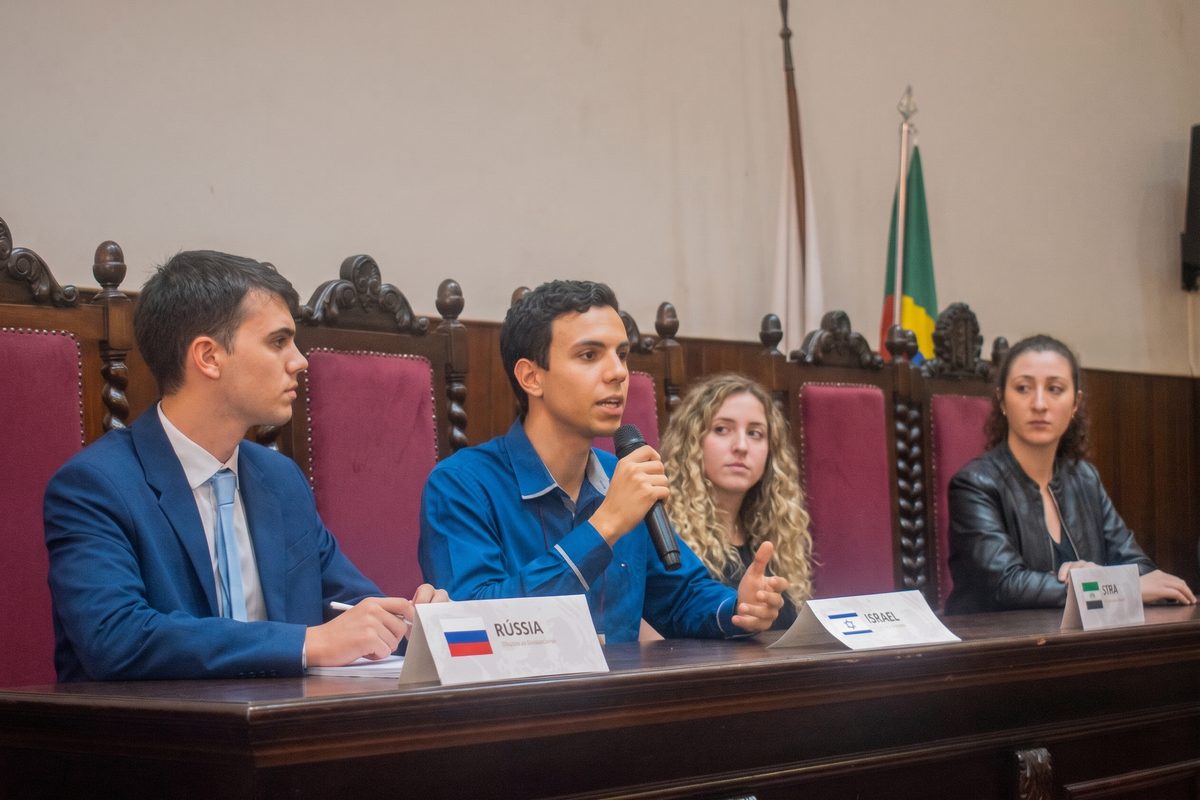
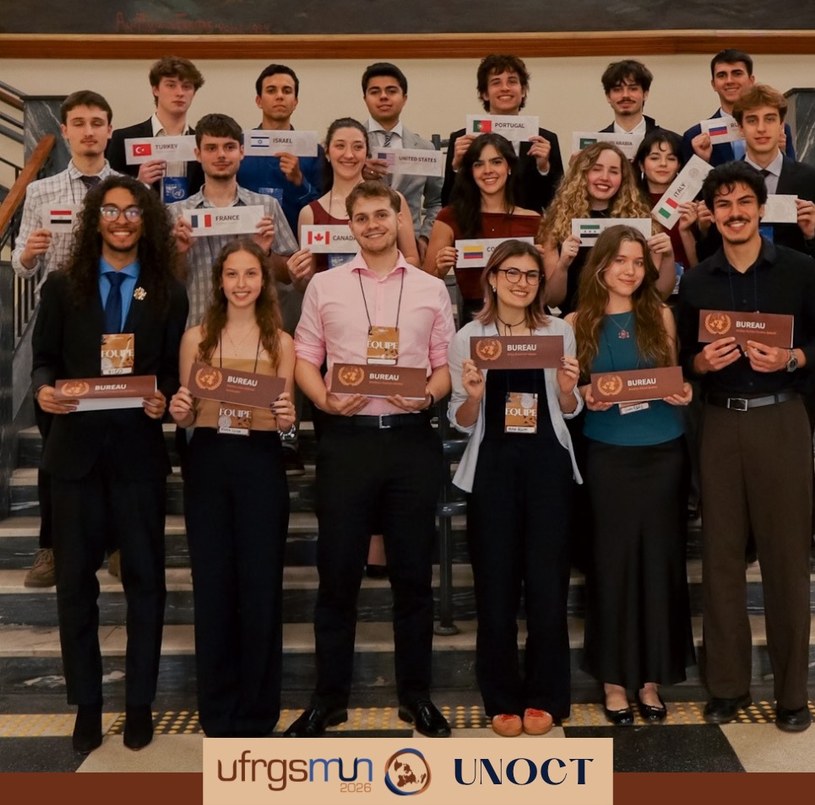
UFRGS’s Model United Nations conference. As the delegate of Israel at the UN Office of Counter-Terrorism (UNOCT), I debated terrorism in the Sahel and cyberterrorism in English, negotiating with delegations whose positions were often far from mine.
Contribution & learnings
How I contributedTo prepare, I followed the news on cyberterrorism, cybersecurity and the Sahel closely. In committee I represented Israel and negotiated in caucuses with other delegations over the wording of counter-terrorism measures, conceding where it cost little and holding firm on the points Israel could not give up. The press team chose me as one of four delegates for a special interview in front of all participants, where I defended my delegation’s position and answered a critical question from the journalists.
What I learnedAgreements came from understanding why each delegation held its position, not from repeating mine. I learned to work with delegations whose views were far from Israel’s, to negotiate wording several sides could accept, to build a bloc around a shared text, and to defend a difficult position in public, in English, without losing precision. The preparation also became a habit: I keep up with cybersecurity and geopolitics day to day, from new attacks and vulnerabilities to regional conflicts and the security debates around them, because an argument only holds when it reflects the current picture.
Diplomacy
Negotiation
Public Speaking
Cybersecurity
Stack & contact
Skills
Systems & Acceleration
C
C++
CUDA
FPGA (Vivado)
vLLM
Ray
Slurm (PCAD cluster)
ML & Data
Python
PyTorch
Quantization (QAT/INT8)
Deep Learning
Reinforcement Learning
LightGBM
Computer Vision
NLP
Software Engineering
FastAPI
Vue
React
TypeScript
JavaScript
Node.js
Express
Tailwind CSS
Firebase
Docker
Git
Languages
Portuguese (Native)
English (Fluent)
French (Proficient)
Spanish (Proficient)
Get in touch
Let’s talk.
Open toML Engineering & AI Research · Quantitative Research · HPC
 Research · UFRGS · since 2026